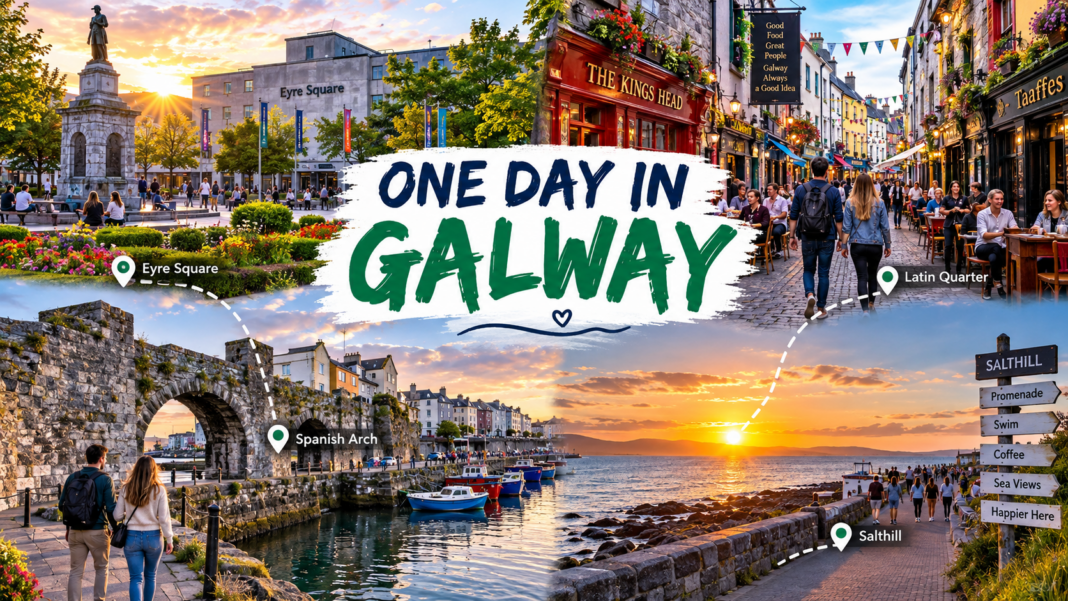


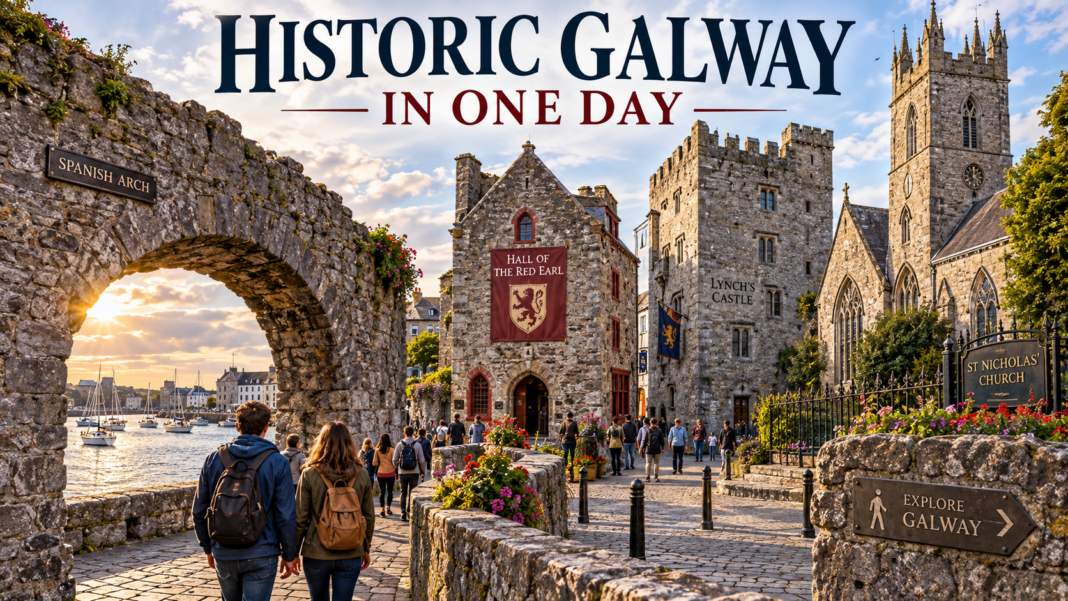
This historic Galway walking itinerary connects medieval streets, merchant landmarks, churches, river crossings and the city’s maritime edge in one rewarding day. The route is compact enough to walk, but it works best when you leave time to look up, read the signs and step inside places that are open. Opening hours and access can change, so check key interiors before travelling.
Start at Eyre Square
Begin at Eyre Square, Galway’s central arrival point beside Ceannt Station and the main coach connections. Notice the Browne Doorway and the square’s memorials before walking towards the old commercial streets. Starting here gives the day a clear shape and makes it easy to shorten the route if the weather changes.
Lynch’s Castle and Shop Street
Continue to Lynch’s Castle, one of the most recognisable reminders of the merchant families who shaped medieval Galway. The building remains in active use, so appreciate the exterior without blocking entrances. From here, follow Shop Street and the smaller lanes towards St Nicholas’ Collegiate Church, noticing how the modern pedestrian centre sits inside the older street pattern.
St Nicholas’ Collegiate Church and the market
Visit St Nicholas’ Collegiate Church when it is open and allow time to examine the structure, memorials and details inside. Galway Market operates beside the church on selected days, linking the historic site with a living local tradition. Respect services, private events and any areas closed to visitors. If you want more background, our Latin Quarter guide adds context without taking you off the route.
Medieval lanes and the Hall of the Red Earl
Move through the Latin Quarter towards the Hall of the Red Earl, where archaeological remains offer a glimpse of medieval civic life. Access arrangements can change, so treat it as a worthwhile possibility rather than a guaranteed timed stop. Continue down Quay Street, where today’s cafés and pubs occupy streets that once connected Galway’s trading community with the harbour.
Spanish Arch and Galway City Museum
At Spanish Arch, the river and waterfront explain why Galway developed as a port. Follow the riverside towards the Claddagh and pause for views across the Corrib. Galway City Museum, when open, adds useful local history through objects and exhibitions. Check current hours before building the day around an interior visit; even when you stay outside, the riverside setting is one of the city’s most atmospheric sections.
Lunch and the afternoon river route
Stop for lunch around Quay Street or the nearby lanes. Afterward, walk towards Salmon Weir Bridge and Galway Cathedral. The cathedral is modern rather than medieval, but its position beside the Corrib and its distinctive interior make it an important part of Galway’s wider story. If the river is high or the pavement is wet, take care near the water and keep to marked public paths.
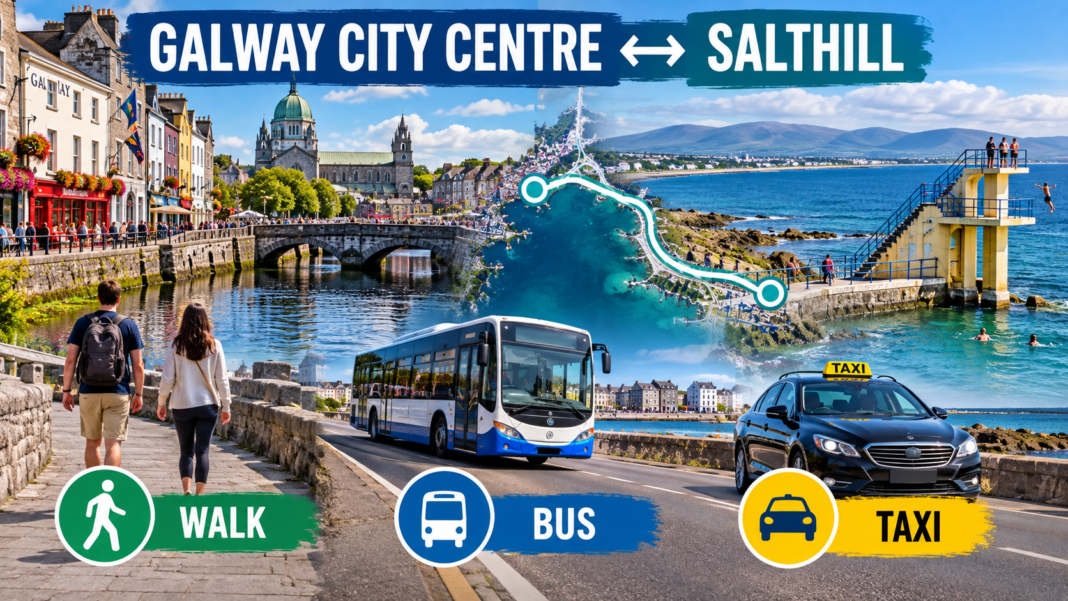
Continue through the university area if public access permits, then return beside the river. This quieter stretch gives the day a useful change of pace after the busy centre. Those with more time can extend towards the Long Walk or Salthill, while visitors who prefer a shorter day can finish at the cathedral and return to Eyre Square by foot or taxi.
Practical tips for a history walk
- Check church, museum and heritage-site opening times on the day.
- Wear shoes suitable for uneven, slippery and wet surfaces.
- Allow time to read plaques rather than rushing between landmarks.
- Respect worship, private events, active workplaces and residents.
- Carry a light waterproof layer; Atlantic weather can change quickly.
- Use our rainy-day Galway itinerary if outdoor walking becomes uncomfortable.
- For a broader route with Salthill options, see our one-day Galway itinerary.