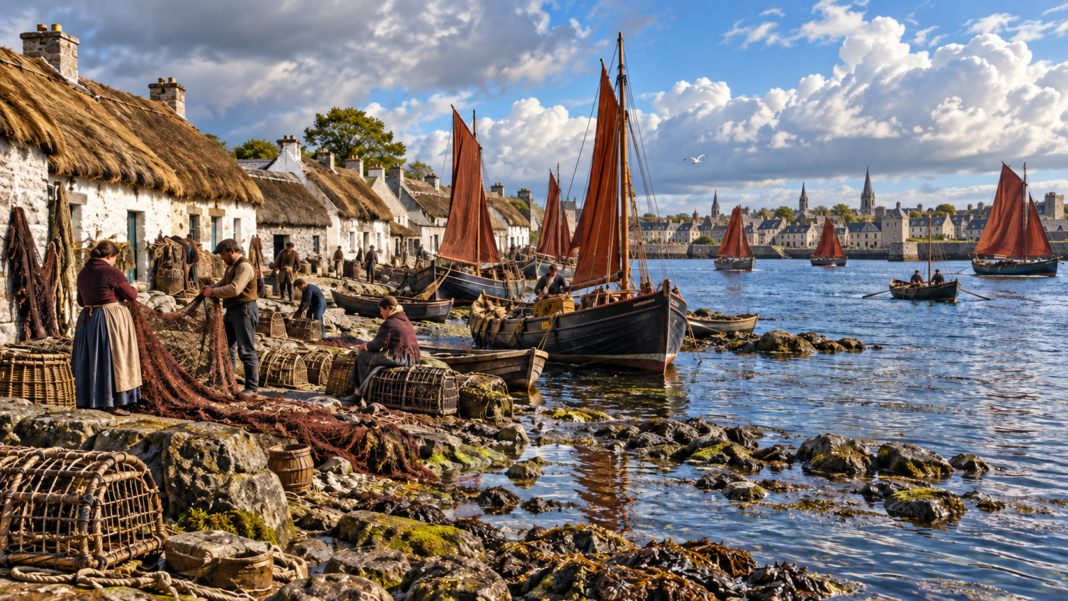


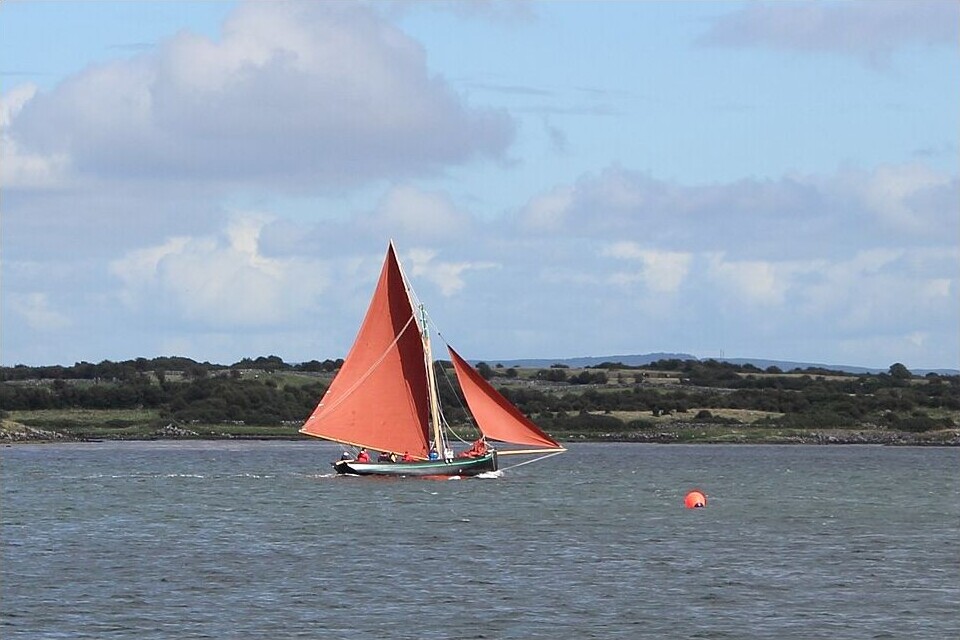
On a grey Atlantic day, few sights cut through the landscape as dramatically as a Galway Hooker under sail. Its black hull sits low on the water while great rust-red sails catch the wind above it. The colours are so distinctive that the boat has become a visual shorthand for Galway itself — but this was never a vessel designed simply to look beautiful.
The Galway Hooker was a working boat. It carried fuel, food and building materials across the bay, brought fishermen to exposed grounds and connected coastal communities long before modern roads reached many parts of Connemara. Today, surviving and restored boats still sail and race, turning a once-essential tool into one of the west of Ireland’s most recognisable living traditions.
What exactly is a Galway Hooker?
“Galway Hooker” is the broad name for a family of traditional wooden sailing boats associated with Galway Bay and the Connemara coast. They were shaped by a demanding environment: shallow landing places, rocky shores, unpredictable weather and open Atlantic water.
Their practical design is easy to recognise. A Hooker has a single mast, a large mainsail and two foresails. The hull is broad and strong, with a sharp entry at the bow, while the shallow draught made it possible to work close to shore and land where there was no developed harbour.
The word “Hooker” has several proposed origins. Galway City Museum explains that it has been linked to hook-and-line fishing and to the Dutch word hoeker, used for a type of fishing vessel. Irish-speaking boatmen, however, traditionally used their own names for the different sizes and styles rather than a single umbrella term.
Four boats, not one
The Galway Hooker is not a single standard design. The traditional family contains four principal classes, each suited to a different scale of work.
- Bád Mór — literally the “big boat”, usually 35–44 feet long. These were the largest carriers and the heavy workers of the fleet.
- Leathbhád — the “half boat”, roughly 28–35 feet long and about half the carrying capacity of a Bád Mór.
- Gleoiteog — a smaller boat, around 20–28 feet, fitted with a fixed boom and stays.
- Púcán — generally 23–28 feet, but rigged without a boom or stays.
The differences mattered. A large decked boat could move a substantial cargo across Galway Bay, while the smaller open types were better suited to local fishing and shorter coastal journeys.
Why are the sails red?
The famous colour began as protection, not decoration. Traditional sails were made from heavy calico. To make the cloth more resistant to weather, fishermen treated it with a solution made from tree bark or, in some cases, a mixture involving tar and butter. Galway City Museum describes the process as “barking the sails”. Repeated treatment protected and stiffened the fabric while gradually turning it dark red or rusty brown.
The black hull had an equally practical purpose. Pitch or tar helped protect the timber from Galway Bay’s salt water and hard working life. Together, the dark hull and red-brown canvas created a silhouette that is now unmistakably Galwegian.
The cargo route that kept communities alive
Before roads and lorries transformed transport in the west, Galway Bay itself was a highway. Hookers carried turf from Connemara and Mayo to the Aran Islands and the limestone country around the Burren, where fuel was scarce. On the return journey, boats could bring limestone back west to improve acidic soil.
The vessels also moved seaweed, livestock, food, general goods and fishing catches. Their importance was social as well as commercial. A sailing arrival could mean winter fuel, supplies for an island household or income from fish and farm produce. The boats connected places that appeared close across the water but could be separated by a long and difficult overland journey.
This history explains why the Hooker belongs to the whole bay rather than to one town. The Claddagh’s fishing community, the villages of Connemara, the Aran Islands, Kinvara and the Clare shore were all part of the same maritime world.
Built for Galway Bay
A Hooker needed to carry weight, handle rough water and remain useful in small, undeveloped landing places. Its form evolved around those needs rather than from a naval architect’s drawing board. Local boatbuilders worked with knowledge passed between generations, adjusting the vessel to its intended work and home waters.
The result was powerful but not luxurious. Crews worked close to the sea, with little shelter by modern standards. Skill mattered enormously: tides, reefs, sudden squalls and the Atlantic swell allowed little room for carelessness.
Decline — and an extraordinary return
Improved roads, motor transport and powered boats reduced the Hooker’s commercial role during the twentieth century. Boats were abandoned, converted or lost, and traditional building knowledge came under pressure.
The story did not end there. From the late twentieth century onward, restorers, sailors and community groups brought old vessels back to life and built new examples using traditional knowledge. Regattas gave the fleet a new purpose, while workshops and museums preserved the skills and stories behind it.
That revival is why the Galway Hooker is more than a museum piece. Restored boats still sail, race and train new crews. The Galway Hooker Sailing Club, founded in 2019, grew from volunteer restoration work on historic vessels including Lovely Anne, built in 1885.
Where can you see a Galway Hooker in Galway?
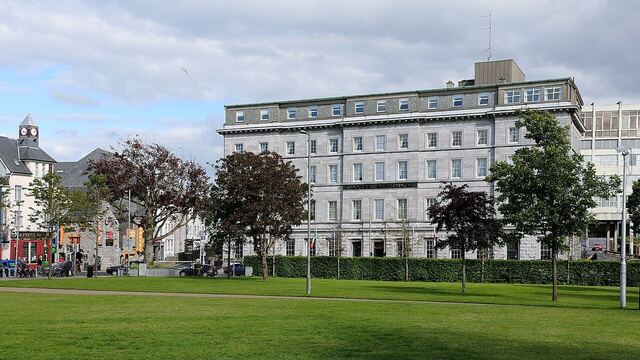
The most useful city-centre starting point is the Claddagh Basin and Claddagh Quay, a short walk from the Spanish Arch. Traditional boats may be moored here, particularly during the sailing season, although visitors should remember that these are working vessels and their presence is never guaranteed.
For a dependable introduction in any weather, visit the free Galway Hooker exhibition at Galway City Museum. It includes the museum’s Máirtín Oliver Hooker, along with objects, film, photographs and explanations of the four boat classes. The exhibition is on the first floor; check the museum’s current opening information before visiting.
Galway Bay’s best-known traditional-boat gathering is Cruinniú na mBád in Kinvara. The event recalls the old turf trade between Connemara and the south side of the bay. Dates and programmes can change, so confirm them with the organisers before planning a journey.
Why the Galway Hooker still matters
The boat survives because it carries more than people or cargo. It holds the memory of communities that read the weather, depended on one another across the water and made a living in a difficult landscape. Its revival also shows that heritage can remain active: timber is repaired, sails are raised and knowledge is learned through doing.
When a Hooker crosses the bay today, the scene is beautiful — but its beauty comes from purpose. The red sails, black hull and compact shape are the visible record of work, weather and ingenuity.
Map: Claddagh Basin and Quay
This is one of the best places near Galway city centre to look for traditional boats and to understand their connection with the old Claddagh fishing community.
Open Claddagh Basin in Google Maps
Frequently asked questions
Is a Galway Hooker a fishing boat?
Yes, fishing was an important part of its story, but larger Hookers were also cargo vessels. They transported turf, limestone, seaweed, livestock and everyday goods around Galway Bay.
Why is it called a Hooker?
The exact origin is debated. Galway City Museum notes links with hook-and-line fishing and with the Dutch word hoeker. Irish-speaking sailors traditionally used separate names for the different boat classes.
Are Galway Hookers still sailing?
Yes. Restored and newly built boats sail and race, supported by community groups, sailing clubs and traditional-boat events.
Can I always see one at the Claddagh?
No. Boats move with sailing, maintenance and seasonal activity. The Claddagh Basin is a sensible place to look, but Galway City Museum is the more reliable year-round option for learning about the tradition.