

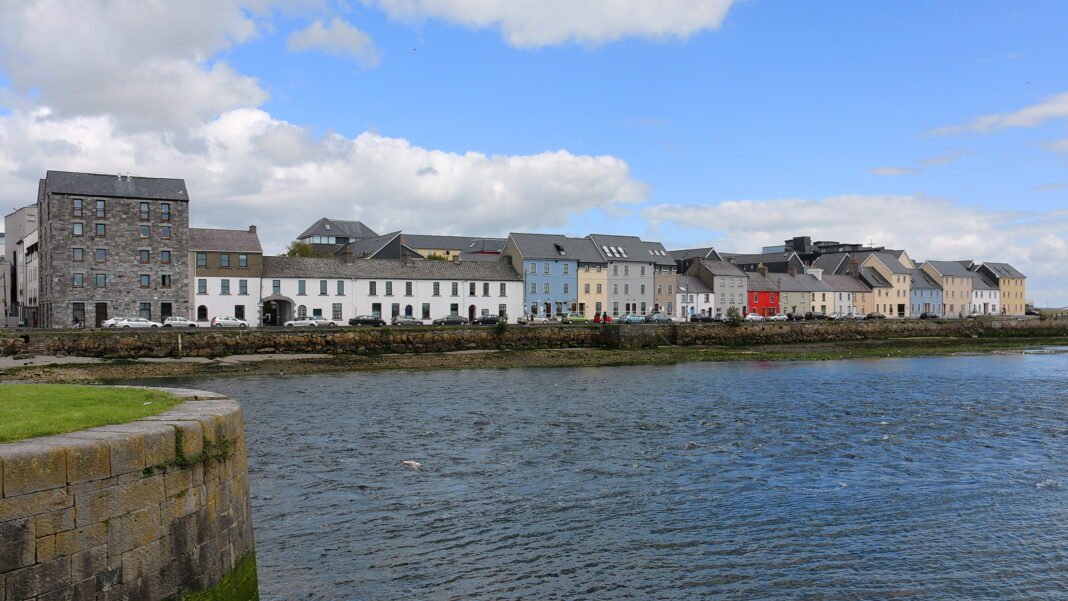
Galway has no shortage of photogenic streets, but few views say “Galway” as instantly as the colourful houses of the Long Walk. Seen across the River Corrib from the Claddagh, the waterfront looks almost theatrical: a ribbon of red, blue, yellow and white buildings between fast water and a wide western sky.
It is easy to treat the Long Walk as a pretty backdrop. Look more closely, however, and it tells a much bigger story — of an expanding port, working families, rope makers, changing fortunes and a city that has repeatedly reinvented its relationship with the water.
What is the Long Walk?
The Long Walk is the historic waterfront immediately beyond the Spanish Arch on the east side of the River Corrib. Today it is a short, atmospheric stretch of Galway rather than a long-distance promenade. Its name makes more sense when you consider its original purpose: it extended the city’s quays along the water and created a substantial new edge to the harbour.
The buildings now form one of Galway’s most recognisable views. Yet this was not designed as a decorative postcard scene. The quay belonged to the commercial life of the port, where boats, cargo, workshops and homes all occupied the same compact waterfront.
Why was the Long Walk built?
The Long Walk was developed in the 18th century by the Eyre family as an extension of Galway’s quays. Historical accounts describe it as both a working quay and a breakwater, helping to create a sheltered mud berth beside the river.
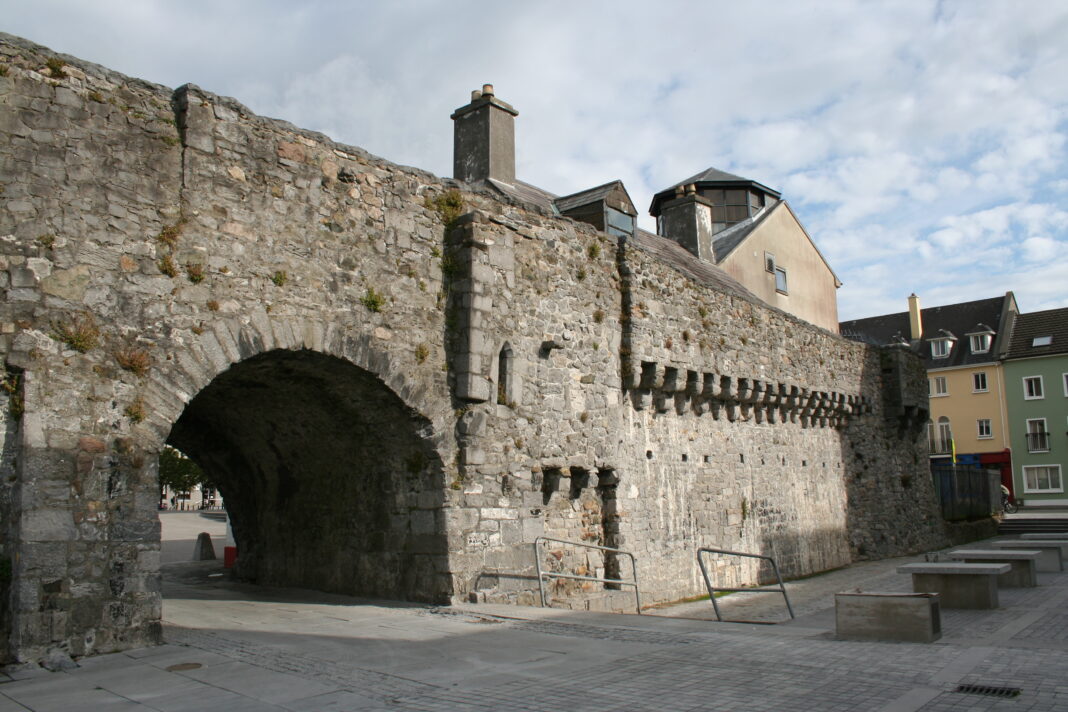
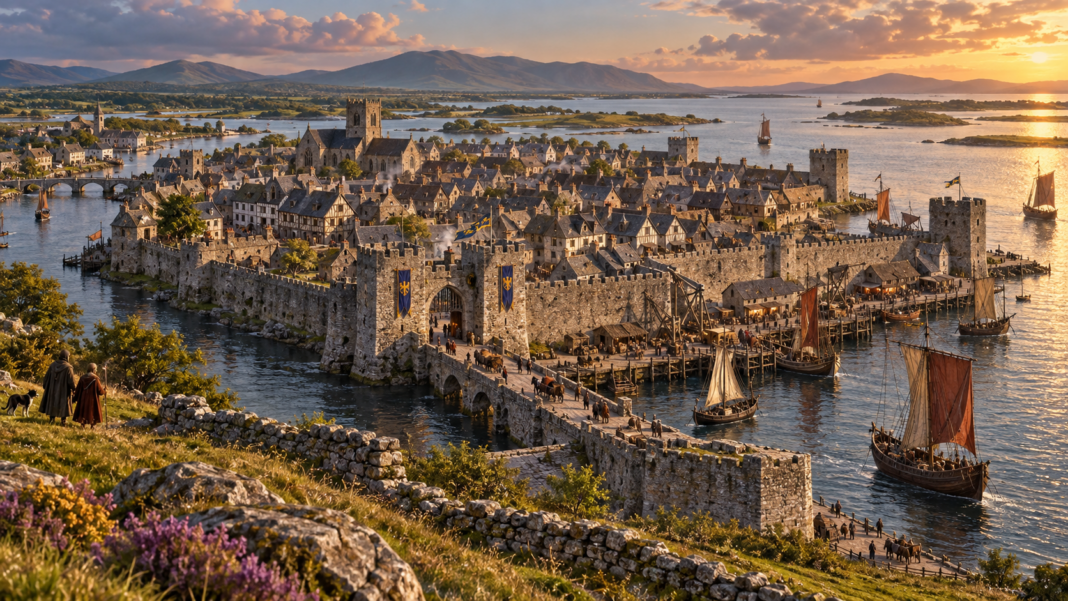
This came after the construction of the earlier defensive wall at the Spanish Arch. The medieval city had once turned its walls towards the waterfront for protection; the later Long Walk pushed beyond that boundary and made more room for Galway’s maritime trade. In that sense, the Spanish Arch and the Long Walk record two different stages in the city’s development: first defence, then expansion.
The Long Walk was once the Rope Walk
One of the most memorable details in the area’s history is its connection with rope making. Long lengths of rope had to be laid out and worked in a straight line, and the extended waterfront provided exactly that kind of space. For a period, the area was known as the Rope Walk.
The name is a reminder that the waterfront’s attractive houses were surrounded by everyday labour. Artisans lived and worked here, supporting a port that depended on ropes, boats, sails, nets, barrels and constant repairs. The postcard view was once a noisy workplace.
Life behind the colourful façades
The Long Walk did not always carry the romantic reputation it has today. By the early 20th century, parts of the area were poorly surfaced and dimly lit. Several properties were crowded tenements rather than fashionable waterfront homes. Old photographs show a harder, more functional streetscape than the polished image familiar to visitors now.
That contrast is what makes the Long Walk interesting. It was shaped by people earning a living beside the harbour, not by a modern plan to create a tourist attraction. Its colour and charm came later, while the narrow plots and close relationship with the river preserve the outline of the older working quay.
Why the best view is from the Claddagh
To appreciate the Long Walk properly, cross the river and look back from Claddagh Quay. From this side, the buildings line up across the water and the full shape of the waterfront becomes clear. The view also connects two communities that faced each other across the Corrib: the commercial town beside the walls and the historic fishing village of the Claddagh.
Morning can bring cleaner light and fewer people. Late afternoon and early evening often create warmer colour on the façades, although Galway weather makes every visit different. On a bright day the houses appear vivid; after rain, their reflections and the changing sky can make the scene even more dramatic.
A short walk packed with Galway history
Begin at Galway City Museum and the Spanish Arch, then pass through towards the Long Walk. Continue along the waterfront and pause to look across to the Claddagh. From here, you can return through Quay Street and the Latin Quarter, or cross Wolfe Tone Bridge to explore the opposite bank.
The walk itself is short, but several important Galway stories meet here:
- The medieval walls: the Spanish Arch marked the protected edge of the old city.
- Maritime trade: the extended quay supported Galway’s commercial relationship with the sea.
- Working crafts: rope making and other port trades shaped daily life.
- The Claddagh: the historic fishing community stood directly across the water.
- Modern Galway: the waterfront is now a social, cultural and photographic landmark.
What to notice as you walk
Do not rush past the Spanish Arch. Stand inside the stone opening and compare its heavy defensive masonry with the more open waterfront beyond. Along the Long Walk, notice the narrow widths and different rooflines of the buildings rather than looking only at their colours.
At low tide, the exposed river edge gives a clearer sense of the old mud berth and the practical nature of the quay. Look back towards the city and the nearby streets: Galway’s historic centre is remarkably compact, and the harbour was never separate from urban life.
Good to know before you go
The Long Walk is outdoors, free to visit and open at all times. The route is mostly level, but old paving and kerbs may be uneven in places. It is only a few minutes on foot from Quay Street and the Latin Quarter. Galway City Museum, the Spanish Arch and the Claddagh are all close enough to combine in one relaxed walk.
Be careful near the water, particularly in strong winds or poor weather. The Long Walk is a residential area as well as a visitor attraction, so keep doorways clear and take photographs from public spaces.
Find the Long Walk in Galway
Open the Long Walk in Google Maps
Frequently asked questions
Why is it called the Long Walk?
The name relates to the extended waterfront quay. The area was also known as the Rope Walk because rope makers could lay out long lengths of rope there.
When was Galway’s Long Walk built?
It was developed in the 18th century by the Eyre family as an extension of the quays and as a breakwater.
Where is the classic Long Walk viewpoint?
The best-known view is from Claddagh Quay, looking across the River Corrib towards the colourful waterfront buildings.
Is the Long Walk free to visit?
Yes. It is a public street and waterfront area with no admission fee.
Sources and image credit
- Kenny’s Old Galway: Long Walk, After the Rain, 1908
- Galway City Museum: Medieval Galway
- Wikimedia Commons: River Corrib and the Long Walk
Featured photograph: River Corrib and the Long Walk, Galway, by Robert Linsdell, licensed under CC BY 2.0 via Wikimedia Commons.